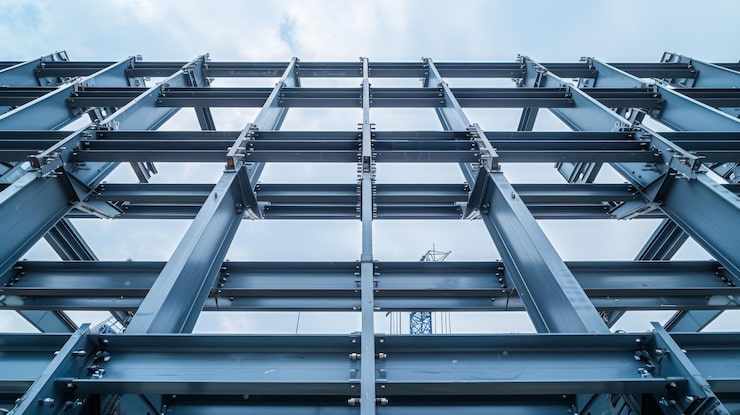
From there, it’s common for contractors to coordinate foundation adjustments or load checks, which are typically handled by a trusted foundation contractor in Los Angeles, CA, especially on mid-rise or mixed-use developments. After the site is prepared and verified, cold-formed steel goes up remarkably fast. Its lightweight means fewer crew members are needed, and its accuracy shortens installation timelines.
Understanding the Cold-Formed Steel
So, what is cold-formed steel framing? In many redevelopment areas, existing structures are first cleared out with the help of demolition services in Los Angeles, opening the way for new construction that relies on more efficient and durable materials. That’s where cold-formed becomes a standout choice. Cold-formed steel is made from structured quality sheet steel that is shaped without heat. That might sound simple, but the difference between cold-formed and hot-rolled steel is fundamental. Hot-rolled steel is shaped when the hot band is red-hot and malleable, while cold-formed steel relies on mechanical bonding and roll framing members at room temperature. The process creates strain hardening, meaning the formed steel actually becomes stronger in the areas where it’s bent.
Because cold-formed steel is produced from uniform sheet steel, it offers predictable mechanical properties and tight dimensional control. You will see that where timber has knots and variations, cold-formed parts are consistent: the same thickness, the same flange widths, and the same lip stiffeners. That consistency is why architects and engineers specify cold-formed steel framing for commercial constructions, modular projects, and precise steel framing projects where precise tolerances are crucial.
Cold-forming does not mean weak. On the contrary, the formed steel geometry—C-studs, hat channels, and U-channels—gives the material stiffness well beyond what its raw thickness would suggest. That strength-to-weight advantage is one reason cold-formed components are the preferred material in many modern buildings.
How the Cold-formed Steel Framing Process Works
The making of cold-formed steel begins at steel mills. Combining iron ore, steel scrap, and carbon in either a basic oxygen furnace or an electric arc furnace yields molten steel, which is cast into slabs and rolled into coils. Those coils, once cooled, form the hot band, which is then cold-rolled to the steel sheet thickness used in framing.
Protective coating (galvanization or galvalume) is typically applied next, so the cold-formed steel sheet resists corrosion. This protective coating is critical when the framing will be exposed or used in coastal or humid environments.
Roll forming machines then take the coated oils and shape them. Roll forming works by feeding the coil through a long series of rollers, each station adding a gentle bend until the strip is formed into a C-stud, a track, or a hat channel. This roll forming approach is efficient, as it produces long lengths with minimal waste and achieves speeds that make cold-formed steel products an economical choice for large runs.
Modern fabrication lines often add value in the same pass: pre-punching holes for electrical and plumbing penetrations, pre-dimpling screw locations for precise fastener installation, and laser labeling for assembly at the job site. Those small efficiencies add up: fewer cuts on-site, fewer mistakes, and faster erection of steel framing members.
Types of Cold-Formed Steel Farming
Cold-formed steel framing is a system composed of numerous specialized components. Each formed steel profile fills a role in the assembly.
Studs
Studs are the vertical C-shaped members that carry the load in wall systems. They are available in a range of depths and steel thicknesses, and their flanges often include stiffening lips that prevent lateral distortion. As cold-formed steel members, studs are strong because of their shape: bends in thin steel dramatically increase stiffness.
U-Channel
U-Channels (cold-rolled channels) are smaller channels used for bracing and for supporting systems. They pass through stud knockouts or sit as ceiling runners. They’re lightweight, practical, and unobtrusive.
Track
Tracks are the horizontal pieces that capture studs at the bottom of walls. They anchor framing to the slab or floor structure and provide a simple, reliable load path into the primary structural system.
Straps
Straps are flat-formed steel strips used for diagonal bracing or local reinforcement. They are thin, efficient, and essential for resisting racking forces from wind or seismic loads.
L-Header
L-headers are L-shaped angles used to distribute loads over openings, such as windows, doors, or service penetrations. They’re a small detail that solves a big problem: carrying loads around interrupted wall lines.
Furring Channel
Furring Channels (also called Hat Channel) create a separation between the framing and the finish materials. They control alignment, improve acoustic performance, and facilitate moisture management by allowing airspace behind finishes.
Benefits of Cold-Formed Steel
Cold-formed steel combines performance and economy in a way that few other building materials can match. Beyond its reputation for being lightweight and easy to handle, its advantages extend to structural behavior, installation speed, sustainability, and long-term durability. For architects and engineers working in increasingly complex environments, these benefits are both convenient and essential.
Strength-to-Weight Ratio
Due to the formed geometry, thin cold-formed sections deliver stiffness that far exceeds what their material thickness suggests. The bends, lips, and flanges built into each member act like built-in stiffeners, helping it resist buckling and distribute loads evenly. This phenomenon allows builders to design taller partitions, longer spans, and multi-story systems using components that are easy to lift, carry, and install.
One of the reasons cold-formed systems work so well in mid-rise buildings is that controlling overall weight directly reduces foundation loads and construction costs.
Dimensional Stability
Cold-formed steel does not absorb moisture, swell, shrink, or twist—properties that make a significant long-term difference. With wood framing, even a slight change in humidity can cause movement that leads to nail pops, drywall cracks, and alignment issues. Cold-formed steel eliminates those concerns, providing a stable base for finish materials.
For owners, this means fewer callbacks and repairs; for builders, it means predictable construction schedules without waiting for materials to acclimate.
Corrosion Resistance and Protective Coating

Every cold-formed component is protected with a galvanic zinc or zinc-aluminum coating. This protective coating prevents rust, even when exposed to varying temperatures and moisture.
The coating works sacrificially.
If the surface is scratched, the zinc corrodes first, preserving the steel beneath it.
In coastal regions, high-humidity environments, or buildings with complex mechanical rooms, this coating dramatically increases service life and durability.
Fire Resistance and Safety
Steel is non-combustible, which gives cold-formed steel framing a significant safety advantage. It does not need a fire, does not release smoke, and does not contribute to flame spread. Its predictable performance under high temperature allows engineers to assign accurate fire ratings and model behavior according to building codes.
For builders working on mixed-use, commercial, or multifamily projects, this reliability becomes a significant compliance advantage.
Sustainability
Cold-formed steel is a recognized green building material because of its recyclability and minimal waste. Every member is engineered and cut from coil with impressive efficiency. Only a minimal amount of scrap is produced, which can also be recycled.
The steel itself already contains recycled content, and unlike many other building materials, steel can be recycled indefinitely without losing strength.
For green building rating programs, cold-formed steel provides clear pathways to credits for material reuse, waste reduction, and extended service life.
Speed and Labor Efficiency
Cold-formed steel is well-suited for fast-paced construction methods.
Roll forming and CAD-driven fabrication shorten lead times because:
- Panels arrive ready to install.
- Pre-punched holes simplify mechanical coordination.
- The lightweight nature of framing members makes on-site handling easier for the crew.
Even small efficiencies, such as precise and labeled parts, add up to faster floor cycles, cleaner job sites, and more predictable schedules.
In today’s industry, where delays can be costly, CFS framing offers a level of reliability that teams rely on.
Applications of Cold-Forming
Cold-formed steel construction is prevalent across nearly every primary building type, as it effectively adapts to diverse needs. Its unique combination of precision, strength, and lightweight makes it an excellent choice for both structural and non-structural applications.
Residential and Modular Construction
CFS wall framing and floor panels are widely used in multifamily housing, student dormitories, assisted living, and hotels. Its consistent dimensions make it perfect for modular construction, where entire rooms or wall sections are built in a factory and delivered to the site ready for installation. The lightweight nature of cold-formed components enables modular units to weigh less overall, thereby reducing transportation and crane requirements.
The repeatability of the material also ensures each module fits together seamlessly, helping eliminate on-site rework.
Commercial Construction
In commercial buildings, cold-formed steel plays a significant role in interior partitions, where straight, stable walls are essential for electrical, mechanical, and fire-rated assemblies.
Beyond partitions, architects use CFS for curtain walls, exterior framing, soffits, roof trusses, and mezzanine systems. Its non-combustible nature makes it easier to meet fire code requirements in hospitals, schools, retail spaces, and corporate offices.
Plus, commercial interiors experience fewer issues with movement or cracking because cold-framing members maintain their shape over time.
Industrial and Agricultural Uses
For warehouses, distribution centers, carports, storage sheds, and agricultural structures, cold-formed steel framing provides long-span capability with minimal weight. Its resistance to moisture makes it ideal for spaces that experience varying temperatures or humidity.
In large industrial sheds or equipment storage areas, cold-formed systems allow designers to create tall, open interiors without adding unnecessary bulk to the structure. Builders appreciate that the framing installs fast, handles environmental exposure well, and offers excellent long-term value.
How is Cold-Formed Steel Used?
Cold-formed steel reaches the building site as components or panels.
Panelization
Panelized construction uses factory-built wall, floor, and roof panels. Panels arrive pre-assembled and are craned or set into place, which reduces weather delays and labor costs. As the pieces are engineered and cut precisely, panelization reduces site waste and minimizes installation time.
Stick-Built Erection
Traditional stick framing, utilizing cold-formed studs and tracks, remains a common practice in many markets.
The framing is light enough to be handled easily, yet stiff enough to hold finishes accurately. Pre-punched holes and labeled pieces speed electrical and plumbing rough-in.
Precision and Integration
CAD/CAM-driven production ensures that pieces fit together accurately. This precision is beneficial for mechanical integration, curtain wall attachments, and modern construction methods that require tight coordination among trades.
Cold-Formed Section Design Considerations
Designing with cold-formed sections requires attention to buckling and performance modes unique to thin-walled members.
Buckling Modes
The thinness of cold-formed members allows them to exhibit local, distortional, or global buckling at stresses below the yield strength.
Engineers use effective section properties to account for reduced strength in slender sections, ensuring that the framing behaves predictably even under variable loads. These considerations become especially important in long-span steel structures, high wind zones, or mid-rise framing, where stability drives overall system performance.
Design Codes and Standards
Design follows the AISI S100, S220, S240, and S400 standards, which synthesize decades of testing and research on the behavior of cold-formed steel. These codes cover allowable stresses, member slenderness limits, connection detailing, diaphragm design, and seismic performance. They are widely adopted across the construction industry because they simplify engineering decisions while ensuring compatibility with modern building codes.
Connection Detailing
Fastener selection, such as self-drilling screws, as well as spacing, edge distances, and the sequence of installation, all impact CFS performance. Screws create discontinuities and stress concentrations, which can trigger premature buckling if poor detailing is present.
Proper detailing minimizes risks like delamination of built-up members or coordinated buckling across compound sections.
This reason is why high-quality detailing remains just as important as the raw steel itself, ensuring long-term durability of the framing assembly.
Why Cold-Forming is the Future of Metal Manufacturing
Cold forming aligns perfectly with the direction the construction and manufacturing world is moving toward: automation, sustainability, speed, and materials that deliver high performance with low waste. As cold-formed profiles are shaped directly from flat steel sheets and refined through a streamlined steel finishing process, they offer unmatched consistency and efficiency compared with more traditional building materials.
Automated, Precise Production
Modern roll forming lines utilize robotics, laser measurement, and real-time simulation to transform raw steel coils into precisely shaped framing members. This level of automation reduces errors, sharpens tolerances, and enables manufacturers to create custom shapes without requiring extensive retooling.
The flexibility of roll forming machines enables them to meet the growing demand for specialty framing profiles in modern construction methods.
Energy Savings and Sustainability
Cold-forming requires significantly less energy than heating steel for hot rolling, making it a cleaner and more eco-friendly process. CFS also contains recycled content and produces less waste, aligning with green building rating programs and sustainability goals. With it replacing heavier materials in many construction material categories, it lowers a building’s embodied carbon footprint.
This combination of efficiency and recyclability positions cold-formed steel as one of the most environmentally responsible framing options.
Market Growth and Versatility
As modular construction expands and off-site fabrication grows in popularity, cold-formed steel’s adaptability makes it a preferred material for modern buildings. Demand is rising not only in commercial and residential projects but also in transportation, infrastructure, and manufacturing.
Its versatility allows it to compete effectively with wood framing, concrete, and other traditional building materials in both structural and non-structural roles.
Conclusion
Cold-formed steel framing is a modern construction solution that transforms steel sheets into precise, high-performance framing members. It combines the strong shape of formed steel with reliable material performance and the quick process of roll forming, allowing for quicker setup, less waste, and lasting strength on the job site.
Whether it’s chosen for its strength-to-weight advantages, corrosion resistance, modular compatibility, or sustainability, cold-formed steel continues to stand out.
If you’re planning new construction or a retrofit, cold-formed steel products can help lower costs, reduce delays, and maintain consistent quality. For many modern projects, it isn’t just an alternative to traditional building materials; it’s often a smarter, future-ready choice.