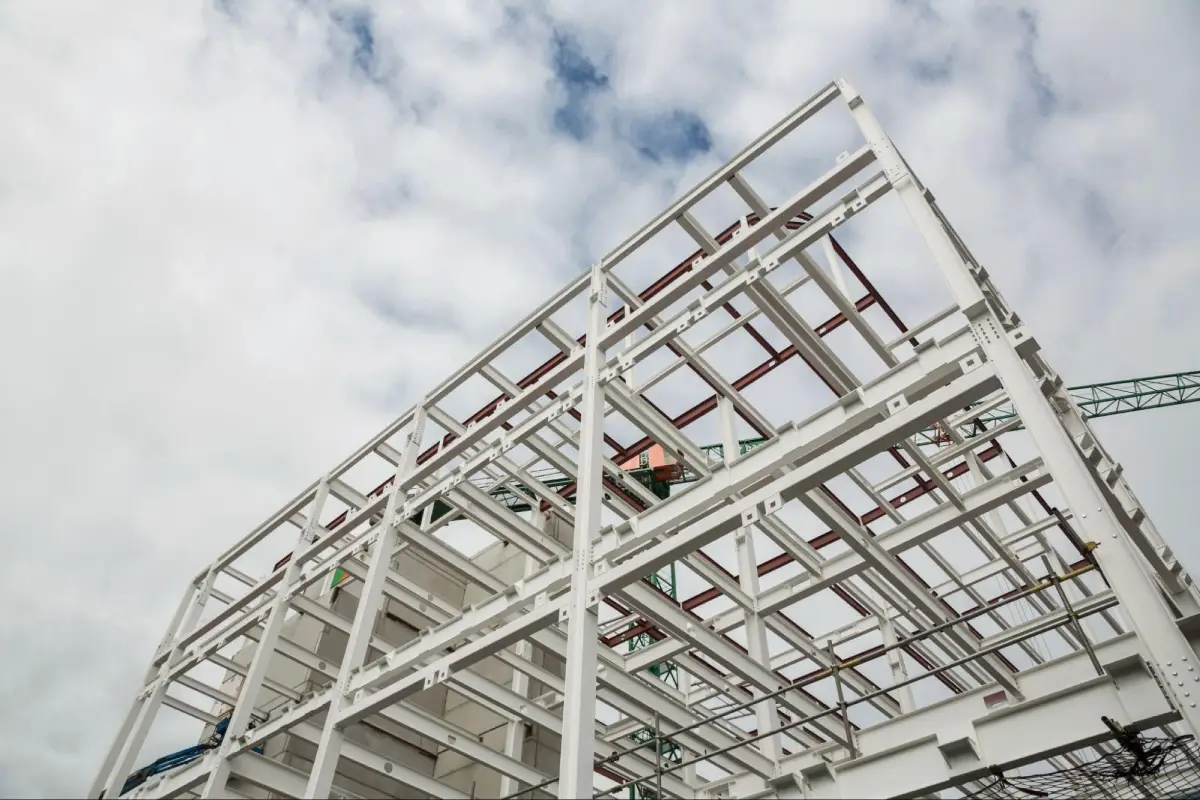
A Look at the Rise of Steel Stud Framing
The rise of steel stud wall framing mirrors broader changes in how buildings are engineered. Many projects today begin with concrete podiums, stepped foundations, or complex grading. On sites that already involve services such as retaining walls in Los Angeles, CA, builders tend to favor engineered solutions from the ground up. When the foundation and exterior systems are designed for stability, steel framing becomes a natural extension upward.
Unlike wood framing, steel components are cold-formed in controlled facilities. Each stud, track, and connector arrives straight, consistent, and ready to install. That consistency reduces layout corrections, limits rework, and helps framing stay aligned with drawings rather than drifting over the course of the project. For many contractors, this predictability becomes the foundation of their internal steel stud framing guide for repeatable, high-quality builds.
Key Benefits Driving Steel Stud Popularity
Steel framing is not chosen for one single reason. It solves several long-standing construction issues at once. When viewed as a complete wall-framing approach, its advantages are difficult to ignore.
Durability & Longevity
Steel framing holds its shape long after installation.
Key durability advantages include:
- No warp, rot, or termite damage
- Stable performance regardless of moisture content
- Straighter walls that protect finishes and drywall
- Reduced long-term maintenance compared to wood systems
Because metal studs do not absorb moisture, they maintain alignment over time. This stability protects interior partitions, reduces cracking, and helps preserve finish quality across the entire framing system.
Unlike wood framing, steel offers built-in resistance to termites and decay. That durability becomes especially valuable in regions where humidity, pests, or extended service life are concerns.
Fire Resistance & Safety
Fire performance is one of steel’s most practical strengths. Steel is non-combustible and does not add fuel during a fire, making it a preferred material in buildings where safety is a priority.
Testing by the National Institute of Standards and Technology confirms that steel maintains predictable structural behavior under extreme heat when paired with rated assemblies.
For buildings that rely on load-bearing walls, steel framing simplifies compliance with fire code requirements and often improves insurance positioning.
Structural Strength & Stability
Steel behaves consistently under loads. Each steel stud is manufactured to uniform standards, eliminating hidden weaknesses caused by knots or grain variation common in wood studs.
This consistency allows engineers to determine performance more accurately. In load-bearing walls and non-load-bearing walls, steel framing supports vertical and lateral forces with minimal deflection, even in wind-exposed structures. Accurate on-center spacing ensures alignment remains intact from the first floor to the top floor.
Ease of Installation & Construction Efficiency
Steel framing becomes highly efficient once crews adapt to the system.
Common installation advantages include
- Factory-punched studs for wiring and plumbing
- Lightweight framing members that reduce physical strain
- Clean fastening using standardized track and screws
During installation, crews rely on engineered connectors, clips, and light bracing to hold alignment as walls are assembled. Precise cutting of studs and tracks allows clean openings for doors, utilities, and mechanical runs, keeping each connection within the framing system secure.
Sustainability & Environmental Benefits
Steel is one of the most recycled metal materials used in construction. Many framing components contain recycled content and can be reused at the end of a building’s life.
Unlike wood framing, steel does not require chemical treatments to protect against insects or moisture damage. This improves environmental impact while maintaining long-term quality.
Cost Considerations: Is Steel Framing More Affordable?
Steel may appear more expensive up front, but cost comparisons shift when performance and longevity are considered over the entire project life cycle.
| Cost Factor | Steel Framing | Wood Framing |
| Dimensional stability | High | Variable |
| Fire insurance impact | Often reduced | Standard |
| Maintenance over time | Low | Moderate to high |
| Material waste | Minimal | Higher |
For projects with tight schedules or durability requirements, steel framing often delivers better value over time than wood alternatives.
Growing Popularity in Different Sectors
Residential Construction
Steel framing is steadily gaining traction in residential construction, particularly in areas prone to moisture, pests, or fire risk. Homeowners appreciate straight walls, cleaner finishes, and fewer long-term repairs.
Steel also integrates well with concrete foundations and modern insulation strategies, helping maintain consistency across multiple floors.
Commercial Construction
Commercial projects rely heavily on metal studs for interior framing and partitions. Steel supports heavier loads, maintains consistent spacing, and adapts easily to tenant changes.
In developments that already involve site coordination, such as retaining walls in Los Angeles, steel framing aligns naturally with other engineered systems, creating continuity from site work through vertical construction.
Modular & Prefabricated Building Systems
Modular construction strongly favors steel. Factory-built framing improves consistency, reduces waste, and shortens schedules. Steel supports a wide range of architectural shapes while remaining lightweight and easy to assemble.
Stud gauge, flange depth, and framing layout can be adjusted to suit different spans while staying compliant with structural and fire code requirements.
What Others Don’t Tell You About Steel Stud Framing
There are practical considerations that rarely show up in marketing brochures but matter greatly once construction begins.
Key points worth knowing include:
- Thermal bridging must be addressed through proper insulation design
- Crews need training and metal-specific tools for accurate cutting
- Sound transfer requires planning in shared-wall environments
- Careless fastening can lead to vibration or long-term movement
- Wind-exposed walls require detailing to withstand lateral forces
Steel framing is less forgiving than wood but far more reliable when planned correctly.
Conclusion: The Future of Steel Stud Framing
The growth of steel stud framing reflects a practical shift in construction priorities. Builders are choosing materials that behave predictably, age well, and perform under pressure. Steel does not replace wood in every situation, but it excels where consistency, safety, and longevity matter most.
As expectations rise across residential, commercial, and modular construction, steel stud wall framing will continue to expand. In many modern builds, the priority is no longer tradition but performance, and steel framing has been created to meet those demands with fewer compromises.