What Is Cold-Formed Steel Framing (CFS)?
Cold-formed steel is sheet steel bent into c sections, studs, or joists without heat.
It’s lightweight, strong for its size, and ideal for cold-formed steel framing in walls, ceilings, and roof trusses.
Because it’s shaped cold, it offers many advantages. It keeps a uniform shape, giving contractors predictable performance and faster installation on any job site.
Key Characteristics:
- Manufactured at room temperature using thin sheet steel shaped into uniform sections.
- Lighter but strong, offering excellent strength-to-weight ratios for walls, floors, and ceilings.
- Highly precise due to controlled manufacturing, reducing on-site cutting and adjustments.
- Non-combustible, providing enhanced fire safety compared to wood framing.
- Corrosion-resistant when coated with a protective layer such as zinc galvanization.
- Easy to transport and install, making it ideal for faster builds and a cleaner framing process.
- Supports reduced waste, since components are cut accurately and delivered ready to assemble.
- Compatible with other materials, especially in hybrid framing systems or renovations.
- Environmentally friendly, with high recycled content and low embodied carbon.
- Versatile, used for metal studs, joists, trusses, load-bearing walls, and curtain walls.
Cold-formed steel is valued for its cost-effective performance, clean installation, and numerous advantages, including speed and space planning.
What Is Structural Steel or Hot Rolled Steel?

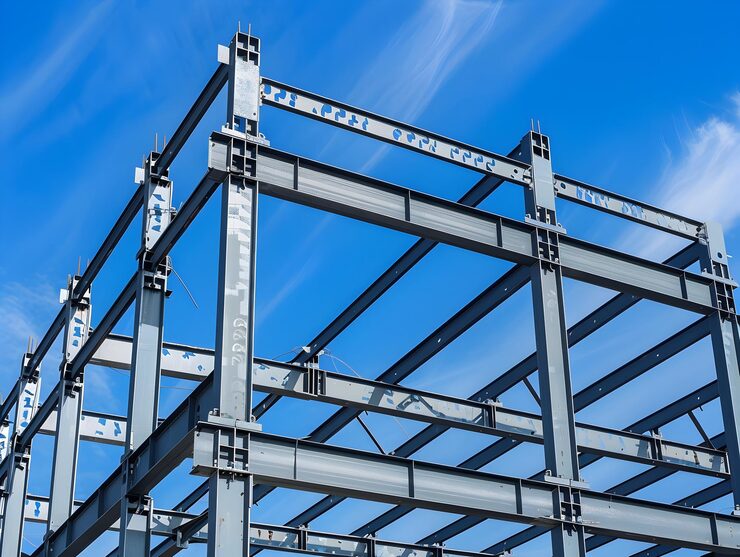
Structural steel is a heavy, hot rolled new steel products used in structural steel framing for large loads and lengthy spans.
It’s commonly found in bridges, warehouses, and high-rise buildings, including some of the world’s tallest buildings.
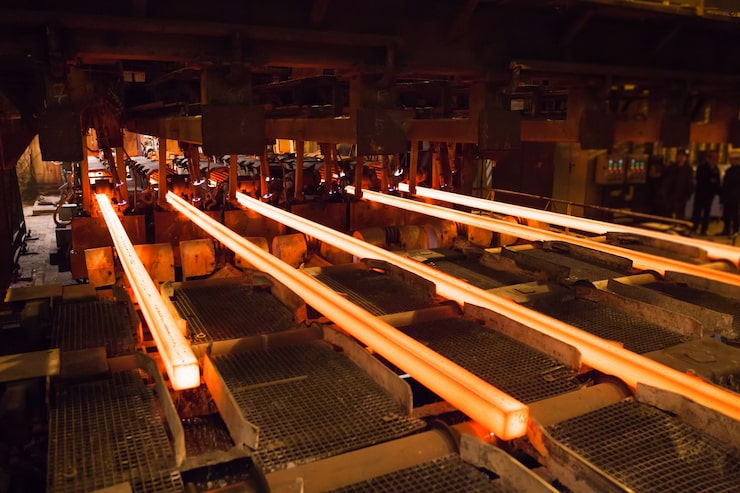
Because it’s hot-rolled, it can be formed into other shapes, such as I-beams, channels, angles, and wide flanges, perfect for resisting greater loads and traveling long distances.
Key Characteristics:
- Hot-rolled during manufacturing, it allows for the formation of strong, thick, and reliable sections.
- Exceptional strength, making it ideal for long spans, heavy loads, and large structural frameworks.
- Highly durable, capable of withstanding harsh weather, impact, and long-term stress without significant deformation.
- Available in many forms, including I-beams, channels, angles, broad flanges, and custom profiles for complex designs.
- Supports column-free spaces, providing architects with the flexibility to create open layouts and modern building interiors.
- Excellent fire resistance, especially when paired with protective coatings or fireproofing systems.
- Compatible with other materials, such as concrete and wood, in hybrid or composite construction.
- Easily fabricated and welded, allowing precise structural connections and efficient assembly on large structural sites.
- Ideal for high-rise buildings, bridges, factories, and heavy commercial construction due to its unmatched load-bearing capacity.
- Long lifespan, offering major advantages like reliability, durability, and performance over decades with proper maintenance.
Structural steel is the backbone of heavy and durable construction materials, especially when building requirements demand maximum strength and safety.
Key Differences Between Cold-Formed Steel vs Structural Steel
Cold-formed steel and structural steel serve distinct roles in construction, despite both being strong and reliable materials.
Their methods, load capacities, applications, significant advantages, and overall flexibility vary significantly.
Understanding these differences helps you select the appropriate steel type for your building’s specific needs, budget, and long-term performance.
| Feature | Cold Formed Steel | Structural Steel |
|---|
| Manufacturing Process | Made by bending formed steel sheets at room temperature; exact manufacturing | Produced by hot-rolled methods, structural steel is produced under high heat for heavy-duty applications |
| Strength | Strong, but limited for heavier loads | Extremely high strength, suitable for heavier loads |
| Weight | Cold-formed steel is light and easier to handle | Heavy gauge material per section |
| Applications | Wall studs, floor joists, small-to-mid-rise building projects | Beams, columns, and typical structural frameworks |
| Flexibility | Great for smaller shapes and quick changes | Excellent design flexibility for complex forms and durable spans |
| Cost | More cost-effective for small and mid-size jobs | Higher cost, but needed for large-scale work |
| Fire Resistance | Naturally non-combustible with a protective coating | Strong fire resistance; can require additional coatings |
| Design Tolerance | Precise steel shapes; tight design limits | Greater design opportunities in large assemblies |
Which Type of Steel Should You Choose for Your Next Project?
Here’s the simplest way to decide between cold-formed steel and structural steel:
Choose Cold Formed Steel if:
- You need light, easy-to-install cold-formed steel framing
- Your project includes load-bearing wall construction up to mid-rise height
- You want a cold process with reduced waste and faster work at the job site
- Your design requires increased usable floor space with smaller cross sections
- You’re replacing wood or using metal studs for efficiency
Choose Structural Steel if:
- Your building height or span exceeds the CFS height limitation
- You need long beams and steel building materials that carry greater loads
- You want wide, column-free steel spaces
- The desired shape is only possible through hot rolling and structural steel framing
- You’re designing major facilities with steel-like construction of factories or high-rise buildings
The difference between cold-formed steel and structural steel mostly comes down to scale.
Cold-formed steel is ideal for precision, speed, and light framing.
Structural steel is the leading choice when strength, durability, height, and heavy-duty performance are required.
Internal tip: If your design includes shoring or retaining structures, check out retaining walls in Los Angeles, CA, concrete pumping in Los Angeles, or foundation repair in Los Angeles, CA, for related services.
Conclusion
Cold-formed steel and structural steel are both excellent building materials, serving different roles. Cold-formed steel is precise, lightweight, and ideal for efficient framing, while structural steel is capable of handling massive loads, long spans, and demanding construction requirements.
Understanding the cold-formed steel vs structural steel comparison helps you match the right material to your next project, avoid overall reduction in safety, and make smarter decisions about cost and performance.
If you need help choosing materials for your typical structure, want advice on construction materials, or are planning your upcoming build, just let the experts know!