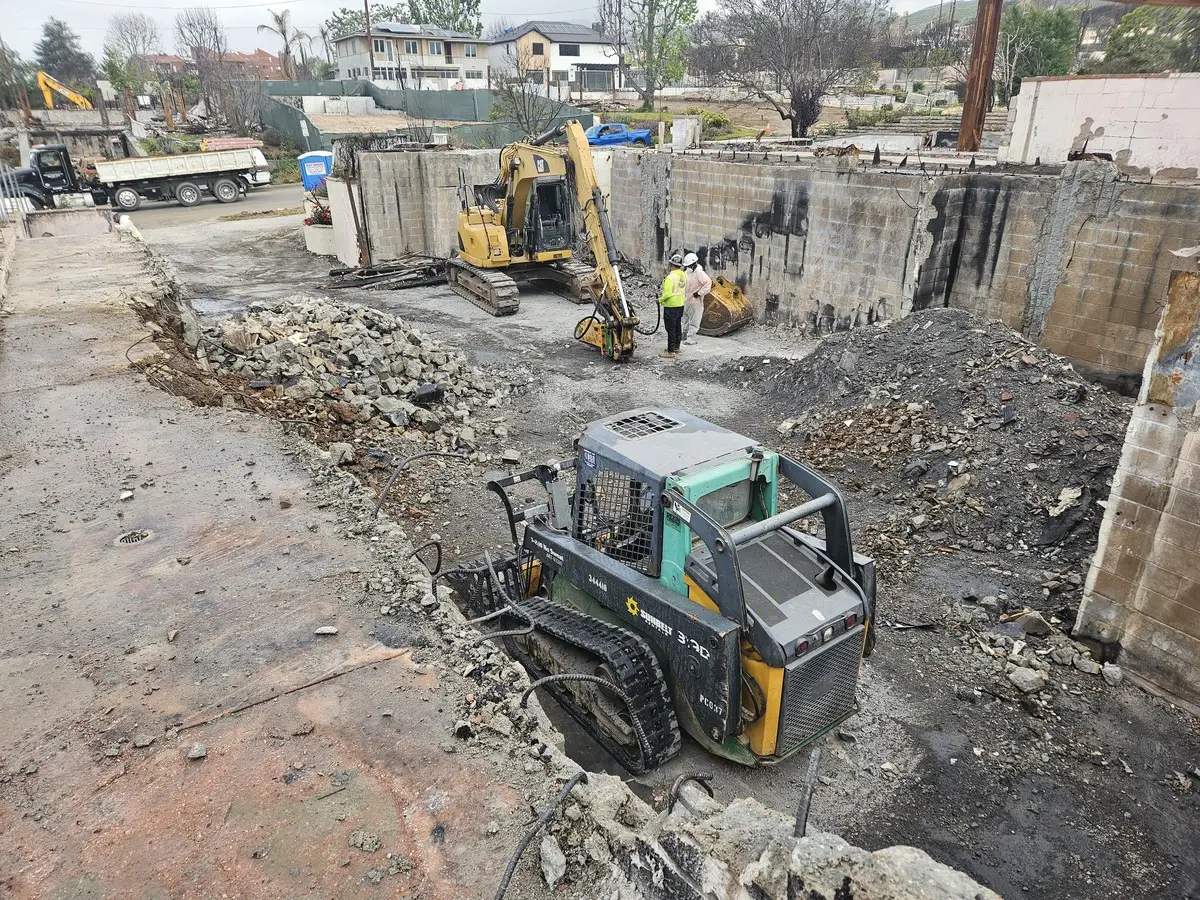
Demolition license requirements determine who can legally tear down a structure. Permit requirements determine whether a specific project gets approved to proceed. Skip either one, and a demolition job can stall, draw fines, or get shut down mid-swing.
Demolition license requirements vary by state, but most fall under a state-issued license administered by a licensing board. Specialty contractors sometimes need an additional classification for demolition work specifically.
This full guide breaks down what contractors need to operate legally, what property owners must confirm before hiring anyone, and how California and Los Angeles handle the process differently from other states.
What Are Demolition License Requirements?
Demolition license requirements are the qualifications a state licensing board sets before a contractor can legally take on demolition work. Licensing usually applies to the contractor, not the property owner, which surprises many first-time clients.
- Contractor licensing: A general license typically covers structural work, including demolition, in many states. General contractors often default to this classification.
- Specialty contractors: Some states require a separate demolition or building-moving license, distinct from general contractor licensing.
- Registration vs certification: A handful of local municipalities require registration only, not a full license, which trips up contractors working across state lines.
Demolition Permit Requirements: What Most Jurisdictions Review
Most building departments review ownership, site conditions, and utility status before approving a permit. Demolition permit requirements shift by city, but the core review points stay consistent nationwide.
- Ownership authorization: Proof that the applicant has legal standing to demolish the structure.
- Project scope: Full teardown or partial, depending on scope changes and which permits apply.
- Site plans: Drawings showing the structure’s footprint and surrounding conditions.
- Utility disconnects: Confirmation that gas, water, and electric lines are scheduled for disconnection, a step that also applies when electrical contractors are involved in the disconnection itself.
- Debris hauling: A plan for where demolition debris goes once work starts.
License vs Permit: Why You May Need Both
A license and a permit solve different problems, and mixing them up causes real delays. A contractor license proves the company is qualified to perform demolition anywhere in the state, since licensing requirements are set at the state level. A demolition permit confirms that the specific project at the specific address has been reviewed and approved locally.
- Contractor license: State-issued license, tied to the business, not the address.
- Demolition permit: Local approval, tied to the property and the scope of work.
- Business license: A separate local requirement in many municipalities, on top of the state contractor license.
- Insurance requirements: Liability and workers’ comp coverage, verified before permits get issued in most jurisdictions.
Who Regulates Demolition Work
State, local, and federal agencies all have a stake in demolition oversight, and requirements often stack rather than replace one another.
- State licensing boards: Set contractor licensing requirements and enforce them through exams, bonding, and disciplinary action.
- Local building departments: Issue permits and inspect sites throughout the project.
- Fire departments: Review projects involving hazardous materials or structures near occupied buildings.
- Environmental agencies: Regulate asbestos, lead, and waste disposal.
- OSHA requirements: Federal safety standards apply regardless of state or local rules.
Where Do I Get a Demolition Permit?
In most cities and counties, the local building department issues it directly, though the exact office can vary by project type.
- Building department: The standard starting point for most residential and commercial projects.
- Online permit portals: Many local municipalities now process applications digitally, cutting weeks off the timeline.
- Public works permits: Needed when demolition affects sidewalks, streets, or right-of-way access.
- Historic review offices: Required for structures flagged as historic or within a designated district.
Common Demolition License Requirements for Contractors
Contractors need several things lined up before a licensing board will approve an application, and the exact list varies by state.
- Work experience: Documented hands-on hours, often several years, under a licensed supervisor.
- Licensing exams: Trade and business law exams are required in most states before issuance.
- Insurance coverage: General liability and workers’ comp once employees are on payroll.
- Surety bonds: A financial guarantee protecting clients if the contractor fails to complete work.
- Business registration: Formal registration with the state, separate from home improvement contractors who may only need local registration.
- Continuing education: Some states require periodic renewal courses to keep a license active.
Common Demolition Permit Requirements for Property Owners
Property owners are usually asked to provide documentation before a permit gets approved, though a licensed contractor often handles the paperwork.
- Permit application: The formal request, filed with the local building department.
- Proof of ownership: A deed or title confirming legal ownership of the property.
- Contractor information: License number and insurance details for the hired contractor.
- Utility letters: Written confirmation that utilities have been disconnected or will be before work starts.
- Asbestos surveys: Required for most pre-1980s structures before demolition can begin.
- Neighbor notices: Advance notice to adjacent property owners, required in some municipalities.
- Traffic control plans: Needed when demolition affects street parking or access.
California and Los Angeles Demolition Requirements

California handles demolition licensing through a dedicated classification, separate from general building work. It’s one of the more structured systems nationwide, and Los Angeles adds its own layer of review.
- California contractor classifications: The state issues a C-21 building moving and demolition classification through the Contractors State License Board, distinct from general contractor licenses. Contractors must hold this specific classification before bidding on demolition work.
- Los Angeles demolition permits: The city requires site-specific approval before any demolition in Los Angeles can begin, in addition to the state contractor license.
- Asbestos notifications: Required ahead of most demolition projects involving older structures.
- Waste diversion: Los Angeles enforces recycling requirements for concrete, wood, and metal debris.
- Right-of-way permits: Needed when equipment or debris bins occupy street space during work.
As CSLB Registrar David Fogt put it in an official board statement, “Unlicensed contractors pose a significant danger to consumers.” That risk climbs sharply once the work involves structural demolition rather than routine repairs.
Federal data backs up why licensing and safety oversight matter here. According to OSHA’s demolition standards page, preparatory operations violations, including missing engineering surveys, account for up to three-fourths of citations issued on demolition worksites.
Property owners planning a teardown in the region typically start with a concrete contractor in Los Angeles who already understands local permitting. Larger jobs may also require equipment rental in Los Angeles for hauling and disposal. For the demolition itself, demolition crews handle permitting and hazard removal together, and projects involving structural concrete often require concrete demolition in Los Angeles.
How to Apply for a Demolition Permit
Applying for a permit follows a similar sequence almost everywhere, even though forms and fees differ by city.
- Confirm local rules: Check the specific building department’s requirements before applying.
- Prepare documents: Gather ownership proof, contractor licensing details, and site plans.
- Submit application: File with the building department, in person or through an online portal.
- Pay fees: Permit fees vary widely by project size and jurisdiction.
- Schedule inspections: Most jurisdictions require inspections at key stages of the work.
- Close the permit: Final sign-off confirms the work met all conditions.
Documentation Checklist Before Demolition Starts
Missing even one item on a documentation checklist is one of the most common reasons inspections get delayed or fail outright.
Category | What to Have Ready |
Contractor documents | Contractor license, insurance certificates, surety bond |
Permit documents | Approved permit, site plans, and ownership proof |
Safety documents | Engineering survey, hazard removal records |
Environmental documents | Asbestos survey, waste diversion plan |
Demolition License and Permit Mistakes to Avoid
Most delays and fines trace back to the same handful of mistakes.
- Assuming rules are statewide: Local municipalities often add requirements beyond the state minimum.
- Skipping utility disconnects: A common first offense that stalls inspections immediately.
- Ignoring asbestos rules: Skipping a required survey can halt a project entirely.
- Hiring unlicensed contractors: Contracting without a license voids protections and risks a mechanics lien dispute, since unlicensed contractors typically forfeit their own lien rights.
- Starting before approval: Beginning work before permits clear invites stop-work orders and fines.
Demolition License Requirements FAQ
A few quick answers to the questions that come up most before a project starts.
Yes, in nearly every state, demolition falls under licensed contractor work, whether through a general license or a specialty classification.
Local building departments issue demolition permits, and some cities also require sign-off from public works or historic review offices.
In many jurisdictions, yes, though most homeowners hire a licensed contractor to handle the application and coordinate inspections.
Timelines range from a few days to several weeks, depending on the city, project scope, and whether asbestos surveys are required.
Unpermitted demolition can trigger stop-work orders, fines, and legal liability, along with complications if the property is later sold.
Conclusion
Demolition license requirements and permit requirements work together, not separately. One confirms the contractor is qualified. The other confirms the specific project has been reviewed and approved. Skipping either step risks fines, stop-work orders, or a stalled project.
Before any demolition begins, confirm that the contractor holds a valid state-issued license and that all required permits have been obtained. That single check prevents most of the costly mistakes covered in this guide.